


-
Living Room Colour Ideas
All Living Room Inspirations Blue Living Rooms Brown Living Rooms Grey Living Rooms Green Living Rooms Orange Living Rooms Purple Living Rooms Pink Living Rooms Red Living Rooms Yellow Living Rooms White Living Rooms
-
Bedroom Colour Ideas
All Bedrooms Inspirations Blue Bedrooms Brown Bedrooms Grey Bedrooms Green Bedrooms Orange Bedrooms Purple Bedrooms Pink Bedrooms Red Bedrooms Yellow Bedrooms White Bedrooms


Light, and Life to India's Homes.
At JSW Paints, we believe true beauty is not just about looking good, but about thinking and doing good.
thoughtful is beautiful.
That is why we have infused thoughtfulness in every drop and detail.
Navratri’s 9 Colours: Their Meaning and How to Bring Them to Your Walls
Navratri is one of India's most cherished festivals where people celebrate divine strength and joyful devotion. Over nine nights, people honour the nine forms of Goddess Durga, with each day associated with a distinct colour. This guide explores the Navratri colour meanings and shares simple ways to bring these shades onto your interior walls.
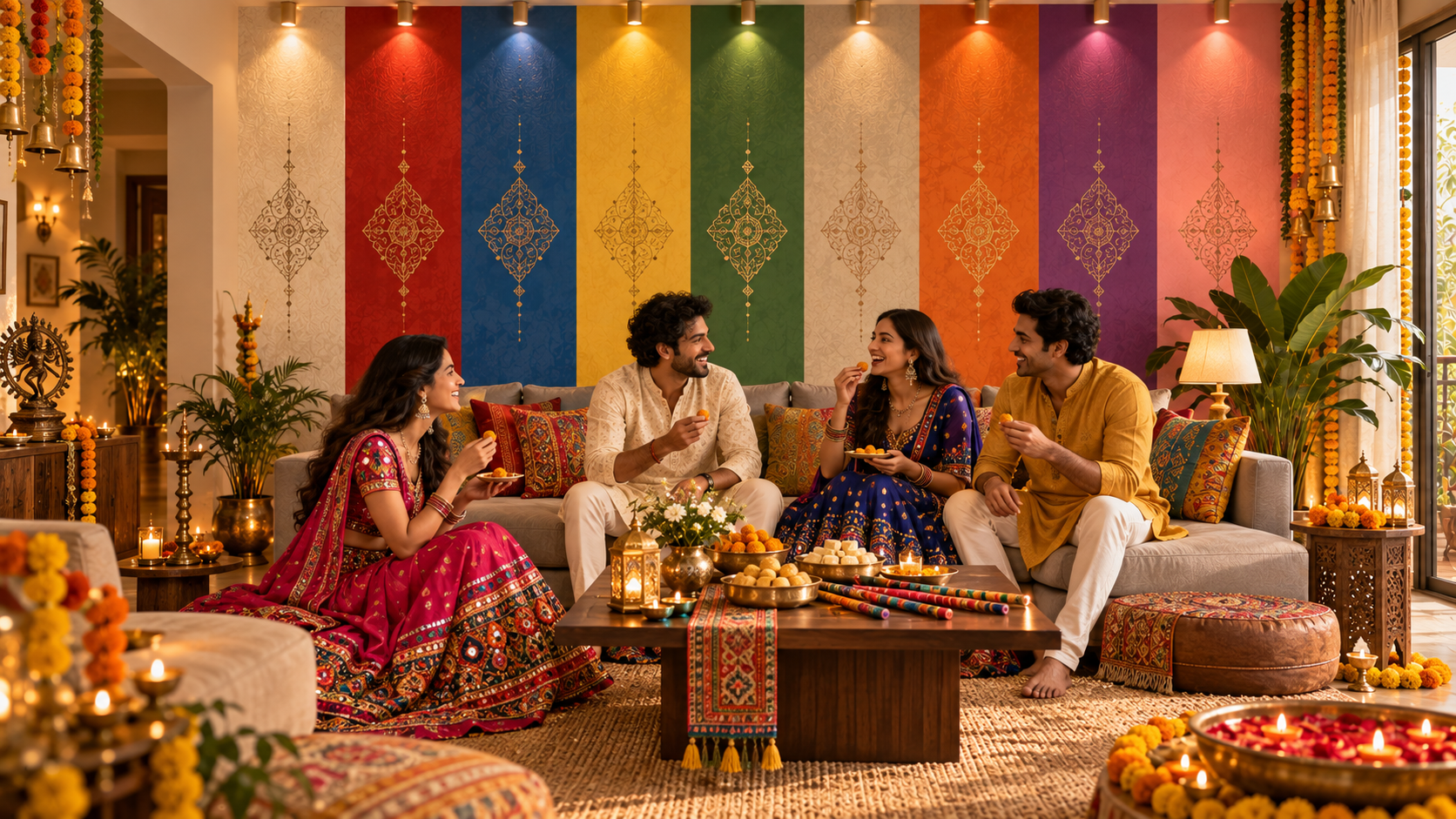
The 9 Colours of Navratri & Their Meanings
Yellow (Shailputri) - Auspiciousness
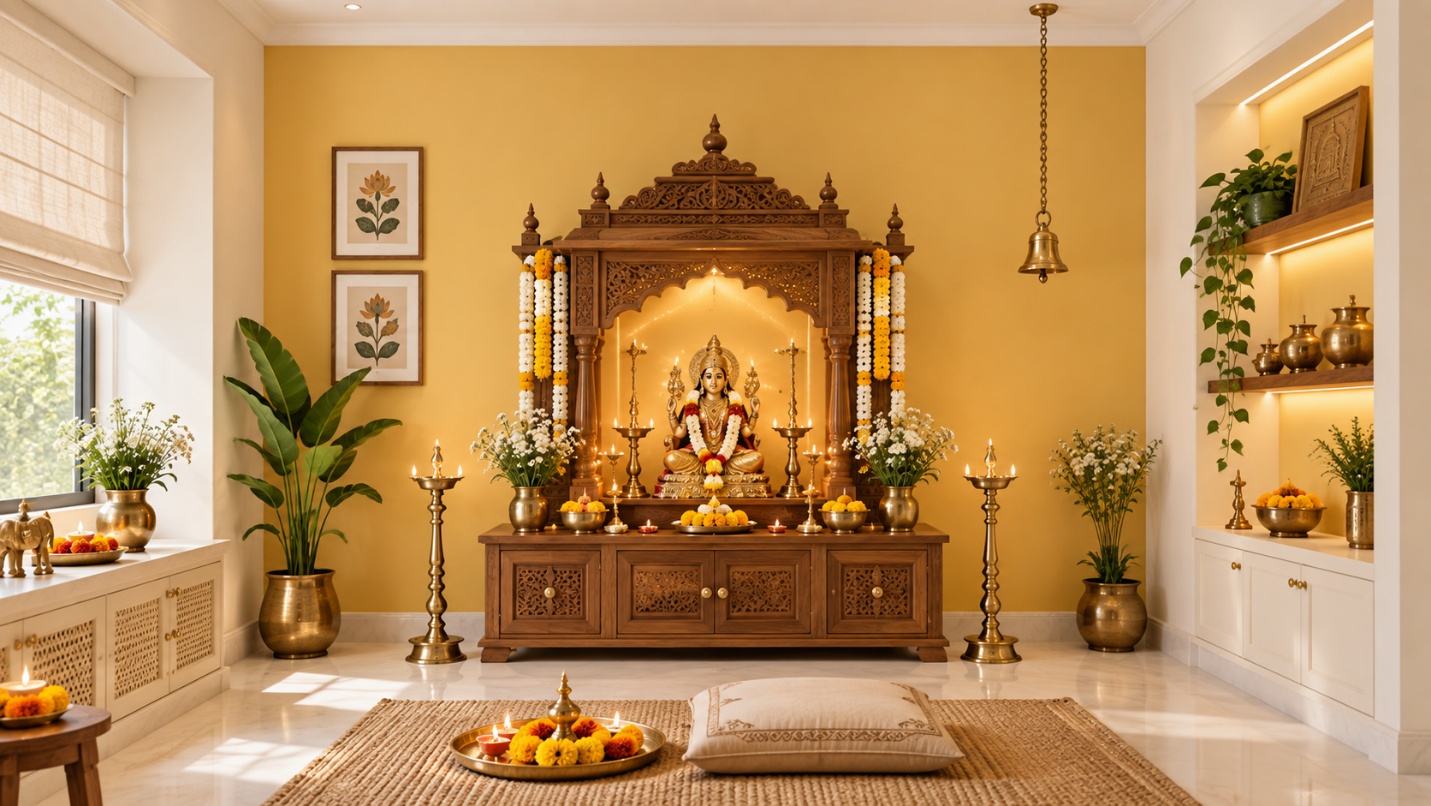
The first day honours Goddess Shailputri, the daughter of the Himalayas, who represents devotion and nature's resilience. Yellow reflects her bright spirit and symbolises new beginnings, positive energy and eternal happiness.
Recommended shades: Use a sunny yellow like (2057 – Firelight) in your pooja room with warm white like Frosted Rain (1023) to create an auspicious space for worship.
Green (Brahmacharini) - Peace
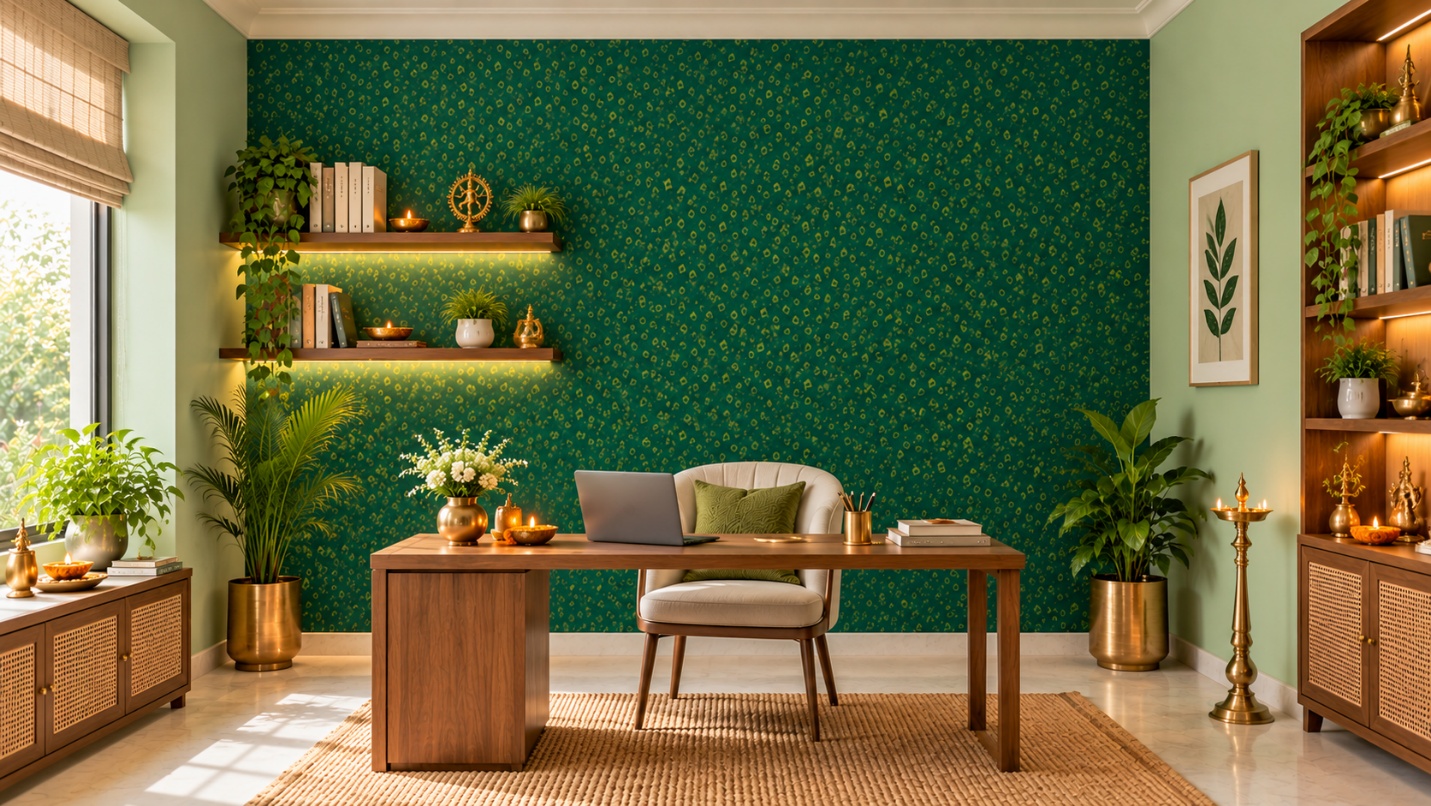
Green is associated with Goddess Brahmacharini on the second day of Navratri, representing inner belief and calm. Inspired by nature's freshness, it brings radiance and harmony to the home.
Recommended shades: Create an accent wall in your study with a rich Bandhej texture in a deep emerald shade like Tibet Green (3458) over a muted sage green base like Pleasing Green (2643)
Grey (Chandraghanta) - Serenity
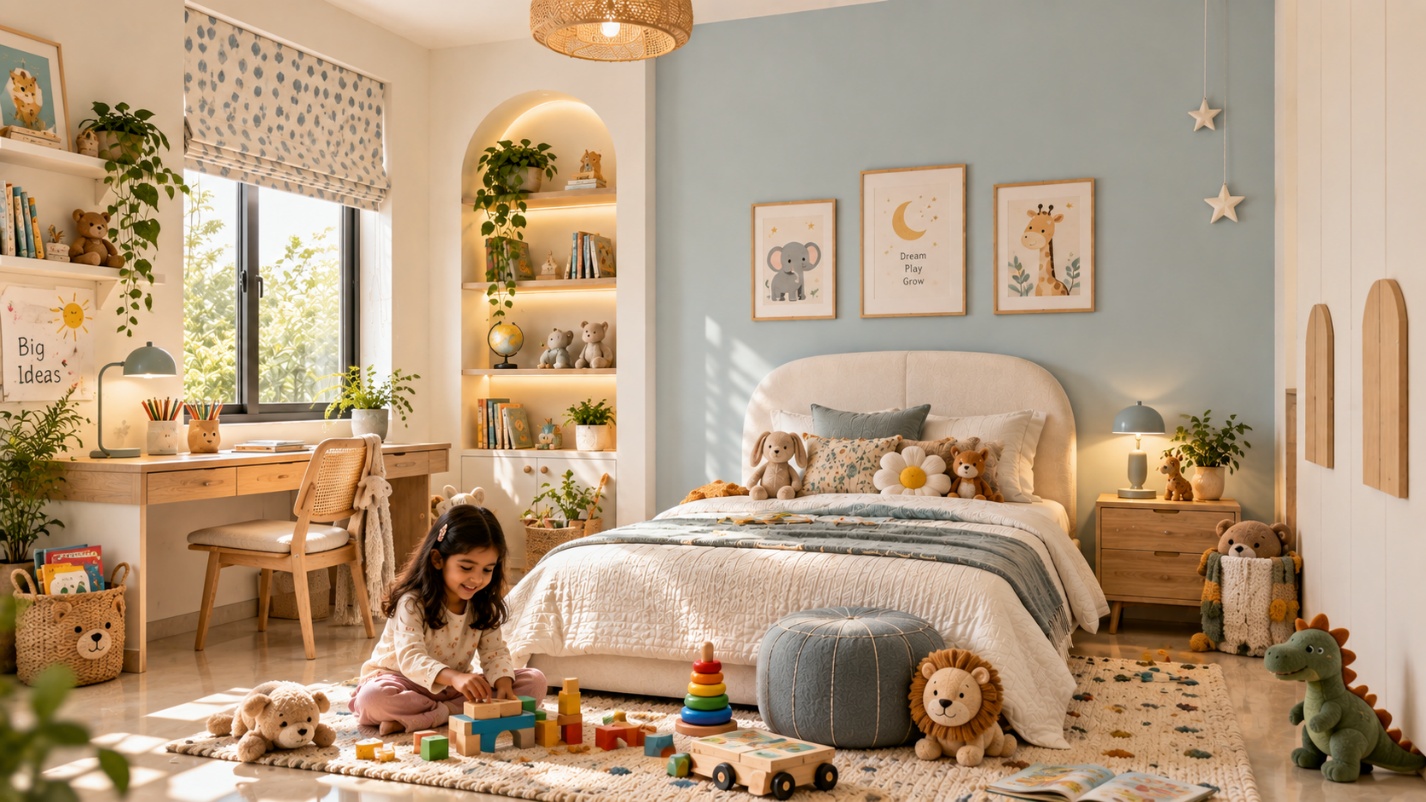
On the third day, grey celebrates Goddess Chandraghanta, who wears the crescent moon and represents courage and composure. It creates a peaceful backdrop by bringing balance to the vibrant setting.
Recommended shades: Use a soft grey like Sense Orientale (3361) on the kids’ bedroom walls with crisp off-white trims like Sweet Day (1033) to create a playful space.
Orange (Koosmanda) - Energy
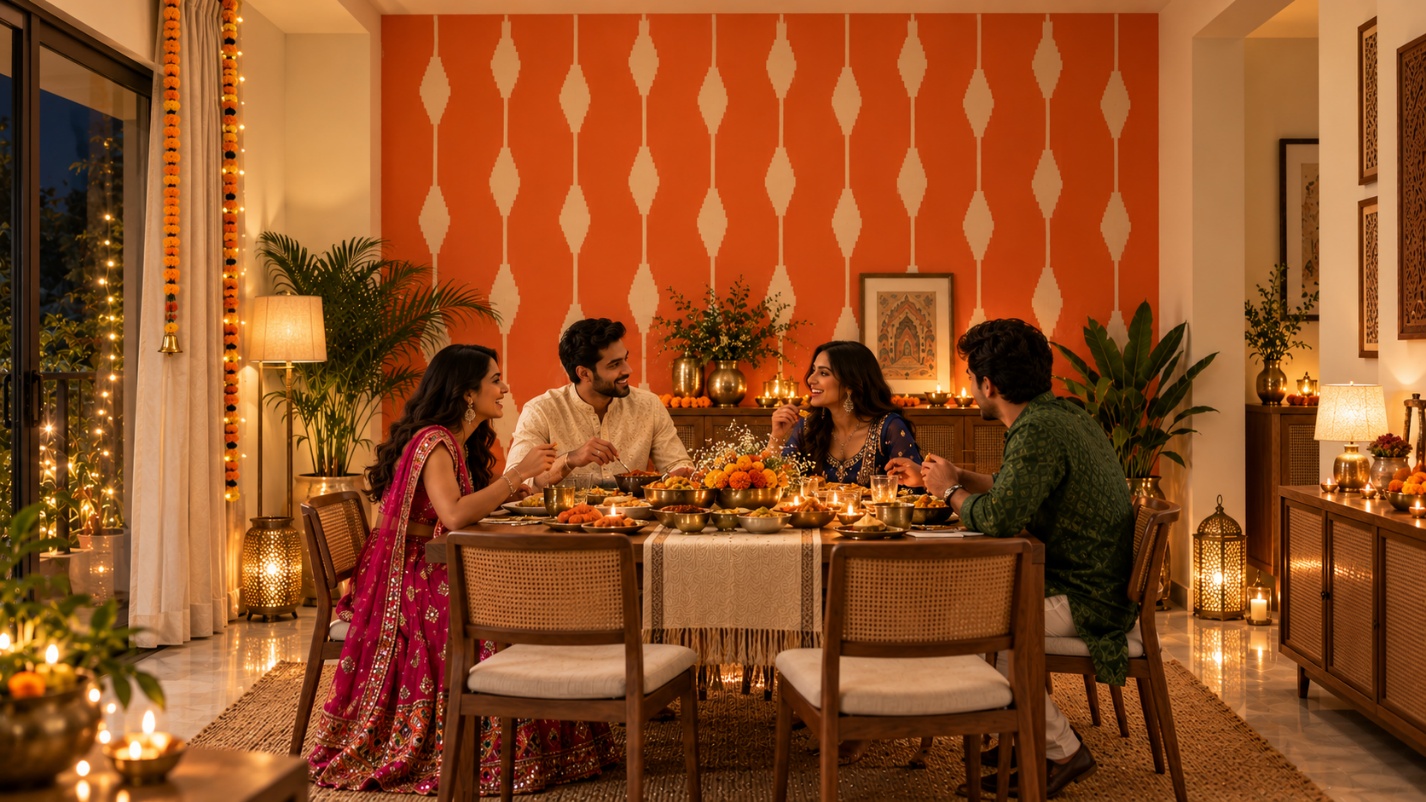
Day four honours Maa Koosmanda, whose divine smile is believed to have created the universe. Orange represents her energy and brilliance, bringing warmth, creativity and a sense of joy to the home.
Recommended shades: Design a feature wall in your dining room with an Ikat texture in bright tangerine like Lunch Box (5053) over a creamy background like Dewy Path (1044).
Red (Skandamata) - Power
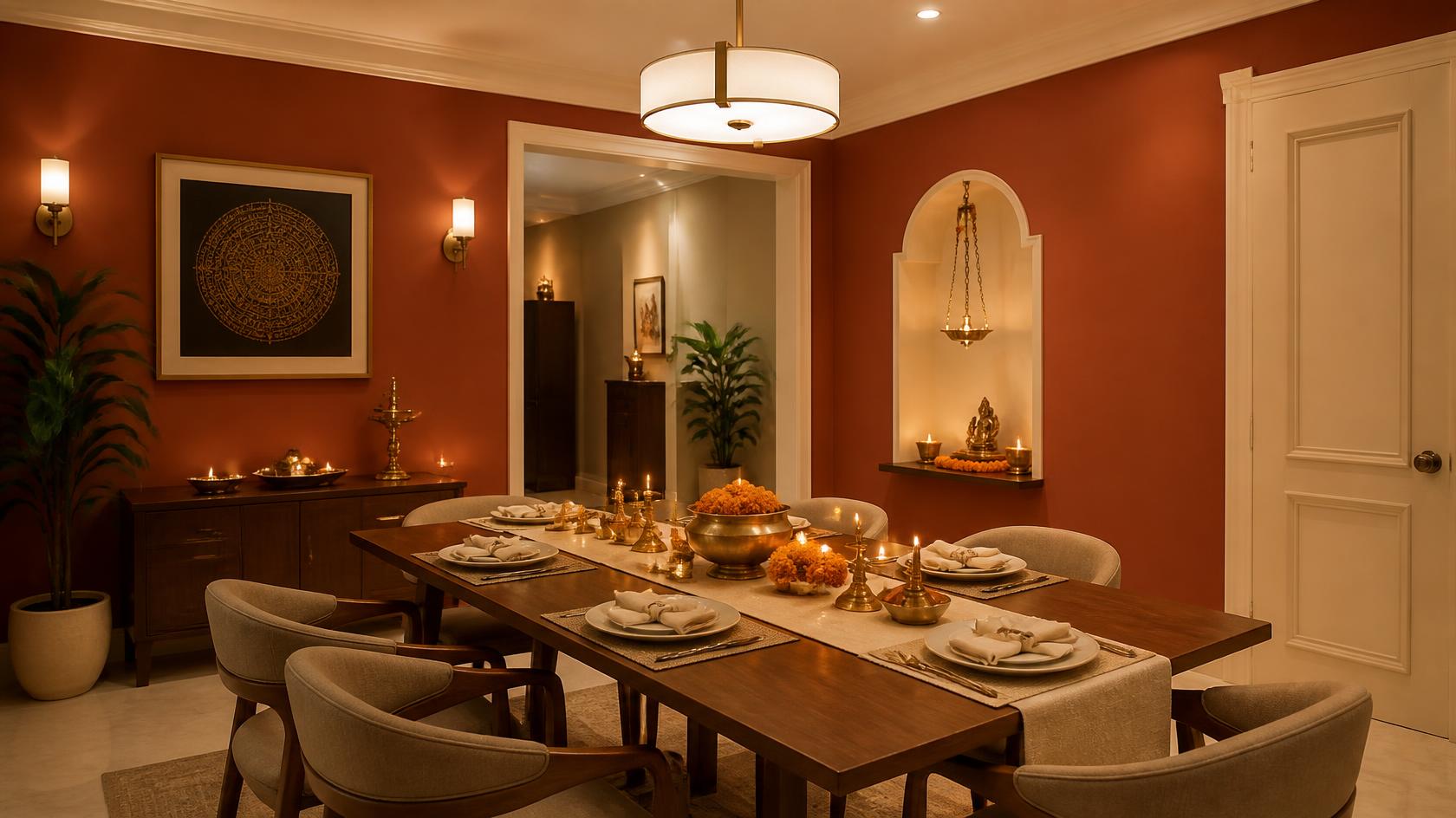
Worshipped on the fifth day, Maa Skandamata represents courage, strength and maternal affection. The colour red reflects these qualities and adds festive charm to your home.
Recommended shades: Use a muted terracotta like Potters Workshop (3178) on the dining room walls and pair it with a light almond shade like First Rays (3071) for the trims and woodwork.
White (Katyayani) - Cleanliness
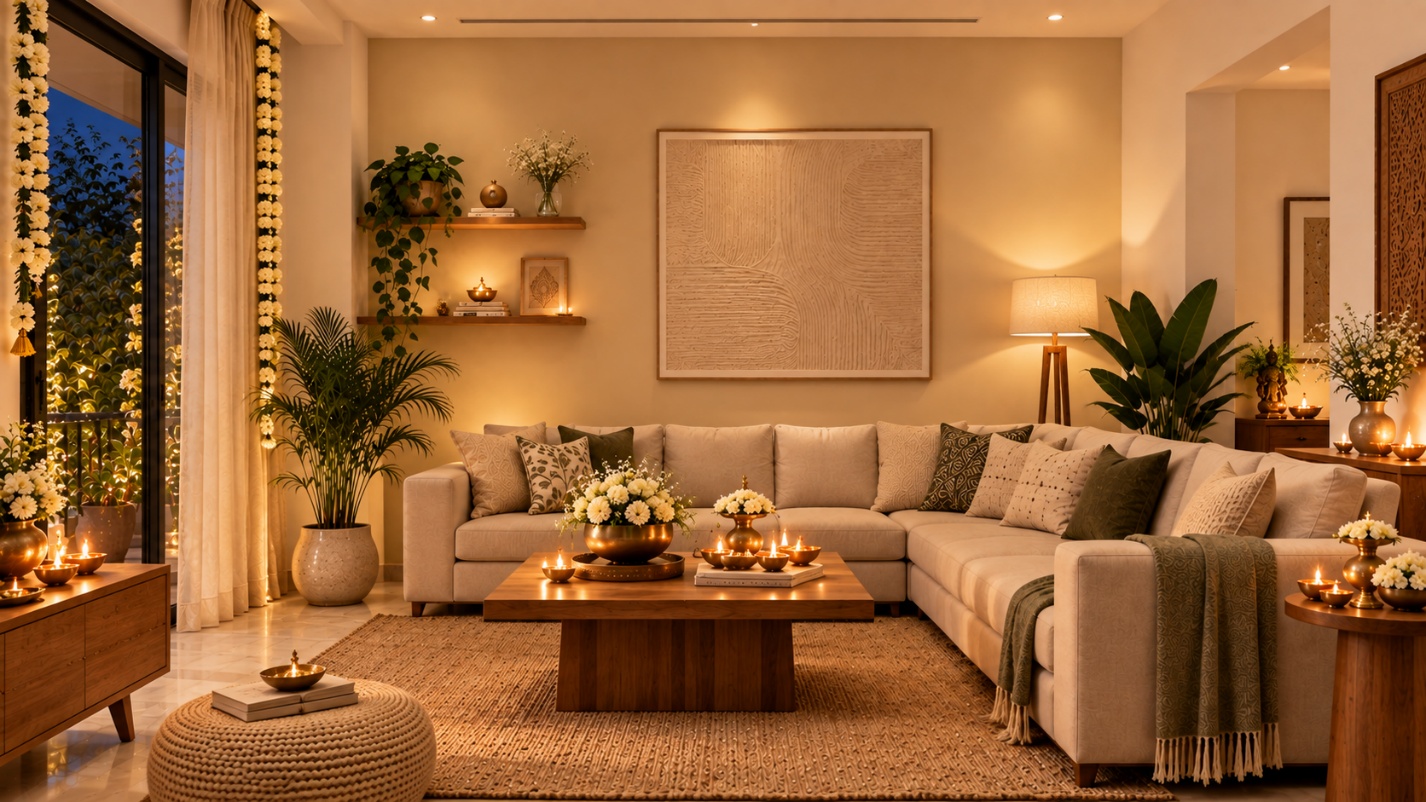
Celebrating warrior goddess Maa Katyayani on the sixth day, white represents clarity, innocence and harmony. It brings a hint of balance while making your home feel open and spacious.
Recommended shades: Transform your living room with an accent wall, featuring the crisp ivory like Shore side Haze (1057), set against a pure white base like Gracious Light (1012).
Purple (Kaalratri) - Transformation
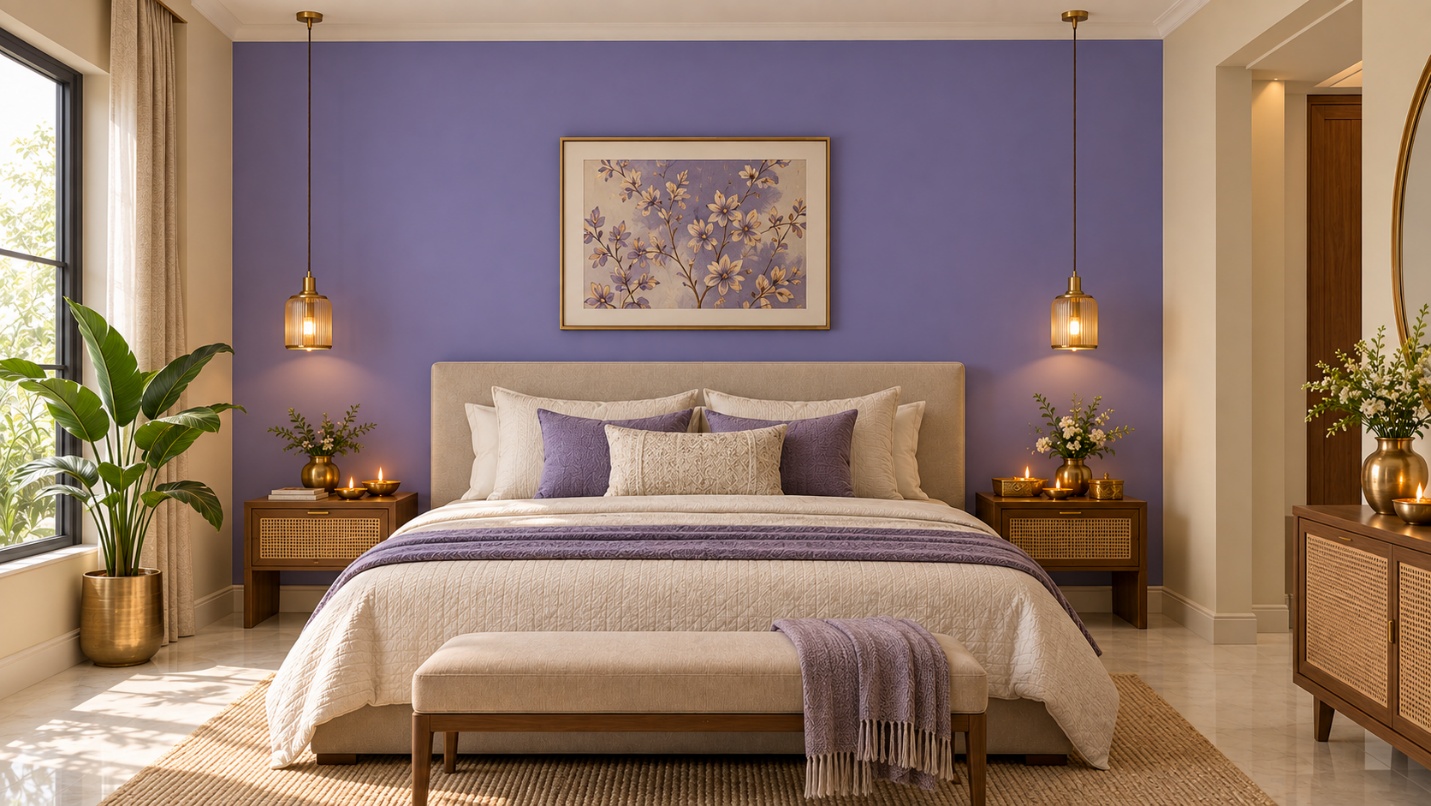
The seventh day is associated with Maa Kaalratri, one of Goddess Durga's fiercest forms. Rich purple represents spiritual transformation, protection and the strength to overcome darkness and obstacles.
Recommended shades: Use a dusty plum shade like When Dreams Travel (5183) on the back wall of a lounge or guest bedroom. Pair it with soft beige-toned borders like Parchment Paper (4062) to create an intimate, luxurious space.
Blue (Mahagauri) - Calm
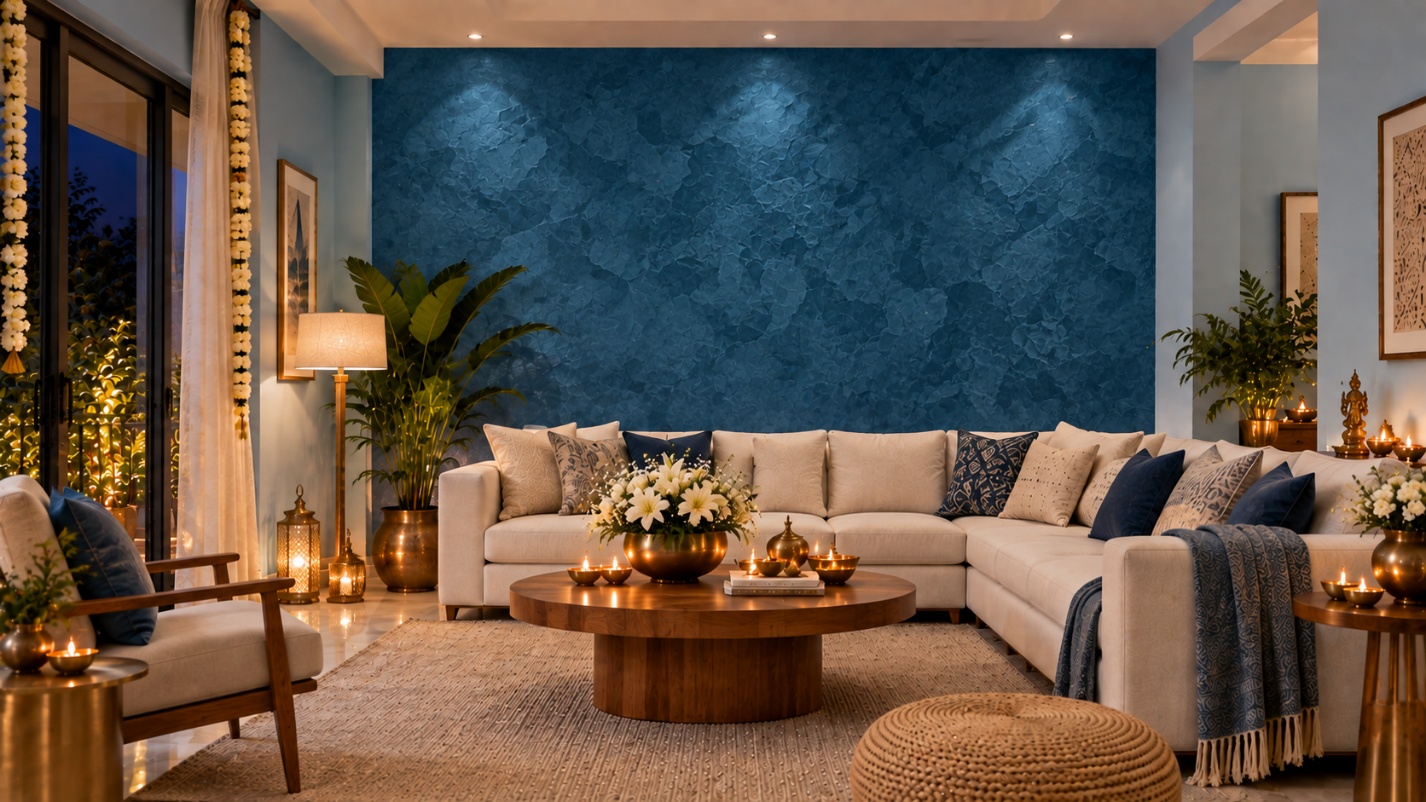
The eighth day honours Goddess Mahagauri, whose grace represents calm and wisdom. Blue reflects the stillness of clear skies and quiet waters and brings a soothing feel to your living space.
Recommended shades: Create an eye-catching accent wall in your lounge with a smooth Marble texture in royal ocean blue like Hockey Blue (S018) over a sky-blue backdrop like Bombay Sapphire (2436).
Pink (Siddhidatri) - Grace
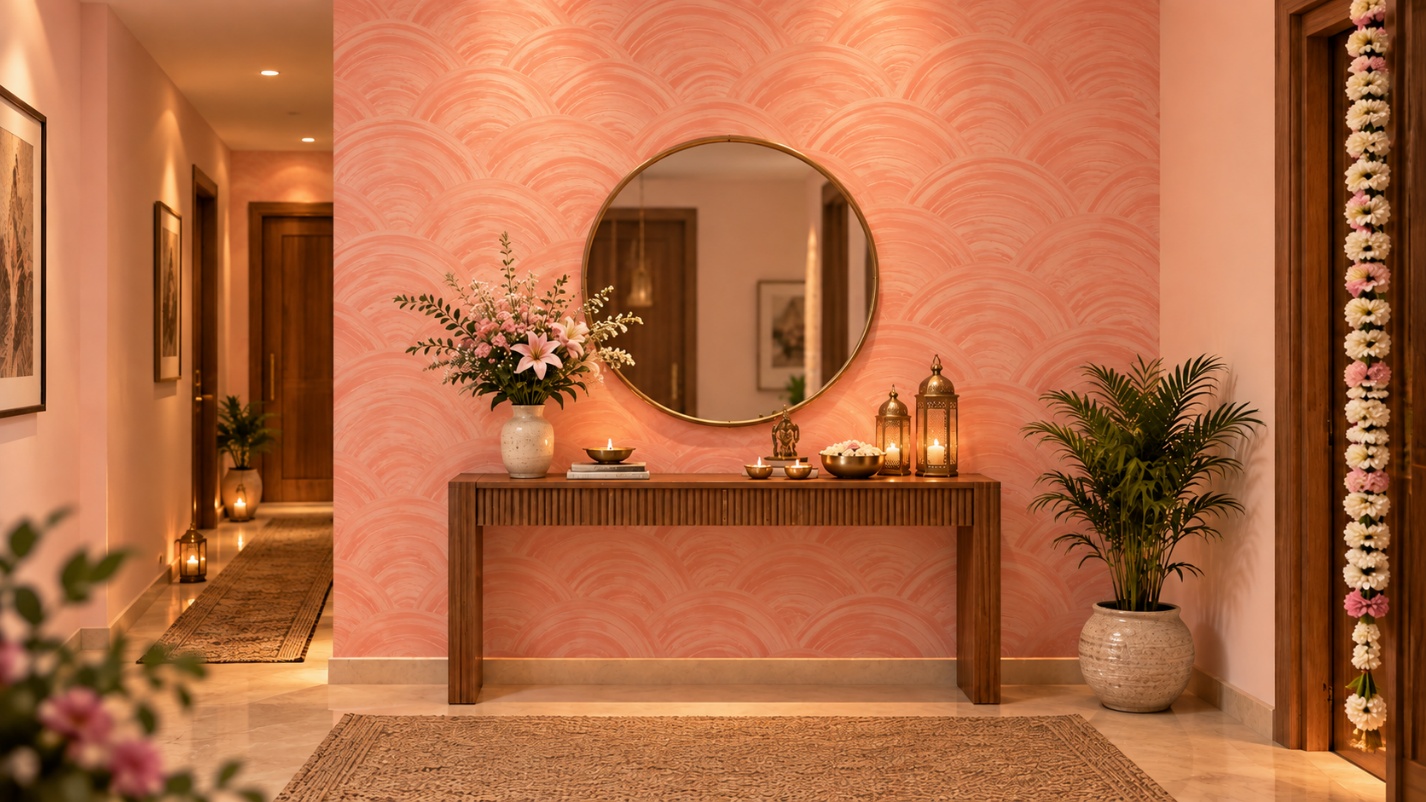
The final day pays tribute to Maa Siddhidatri, with pink representing compassion, unity and sacred blessings. This shade brings elegance to your home and creates a welcoming atmosphere.
Recommended shades: Add a festive touch to your hallway with a Disc Spin textured finish in rose pink like Rainbow Rocket (2267) over a soft blush base like Baby Pink (2265).
Incorporating Navratri Colours Into Your Home
Living Room: Neutral Base with Festive Accents
Colour Base: Keep main walls in versatile neutrals like soft whites Shore side Haze (1057) or greys Sense Orientale (3361).
Styling Tip: Anchor the room with a neutral base paint, then style with accent wall textures in vibrant tones like Alright With Me (5206) or Accent Orange (5064). Bring in festive contrast by pairing wall paints with brass accessories, metallic wall art and colourful floor rugs.
Dining Room: Warm Tones with Light Pairs
(Colour-code: Potters Workshop - 3178, Mandarin Orange - 5052, Sunny Side - 5321, Almond Milk - 2062)Colour Base: Opt for appetite-stimulating, joyful shades like Potters Workshop (3178), Mandarin Orange (5052), or Sunny Side (5321).
Styling Tip: Style warm-toned walls by trimming them with Almond Milk (2062) on door frames and window sills. This grounds high-energy wall colours and creates a balanced backdrop for festive table settings and wooden dining furniture.
Bedroom: Soothing and Luxurious
Colour Base: Choose tranquil shades like Sky Vault (3304) or Sage Leaves (3492) for headboard feature walls.
Styling Tip: Style dark feature walls with warm accent lighting, such as bedside lamps, to bring out the undertones of the paint. Balance cool wall shades with warm fabric furnishings in blush or ivory.
Conclusion
Navratri brings a celebration of optimism, courage and renewal into our everyday lives. Understanding the colour psychology of Navratri lets you celebrate cultural traditions while carrying the joyful spirit of festival wall colours throughout the year.
JSW Paints interior wall emulsions and the Vogue wall textures offer stunning, durable and safe finishes that suit diverse festival painting ideas. You can also use the JSW Paints AI Visualizer to observe how the 9 colours of Navratri look on your walls before you begin.
FAQs
Which colour should I choose for an accent wall during Navratri?
Yellow, red or teal can create a festive accent wall that pairs well with festive home décor.
Can I mix multiple Navratri colours in a single room?
Yes, pair soft shades like sage green and warm cream, then add brighter colours through cushions, art and table runners.
How do textured paints enhance festive interior home walls?
Textured paints reflect light softly, adding depth and character to plain walls.